
Monday Planning

Eric Kvam
|
Monday Planning
5:08
Habits form the foundation for success in just about everything we do. The habits we form directly impact our performance because they dictate how we spend our time. Consider this: if you had 18 months to achieve an annual quota, we would all be successful. The problem is we only have 12 months, so we need to be disciplined about how we use our time.
Let me take a moment to share a typical Monday when I was new in sales. First, I would check my email and begin responding to messages. This could easily take me down a number of rabbit holes. In many cases, meetings would sneak into my calendar on Monday, so I would need additional time to prepare. Next, I would scramble to write down the basics of my pipeline to prepare for the forecast call at 11 am. I would be brief on the forecast call and share as few details as possible to avoid scrutiny. Finally, I would rarely prepare for my one-on-one meeting with my boss later in the afternoon because I was so busy. In fact, I was always busy. Busy responding to customers, busy responding to team members, and busy being reactive. Being busy looks productive, but it rarely is, and over time, it can become exhausting. During this course, I will cover several changes that affected my performance, but none were as significant as the shift in my planning habits.
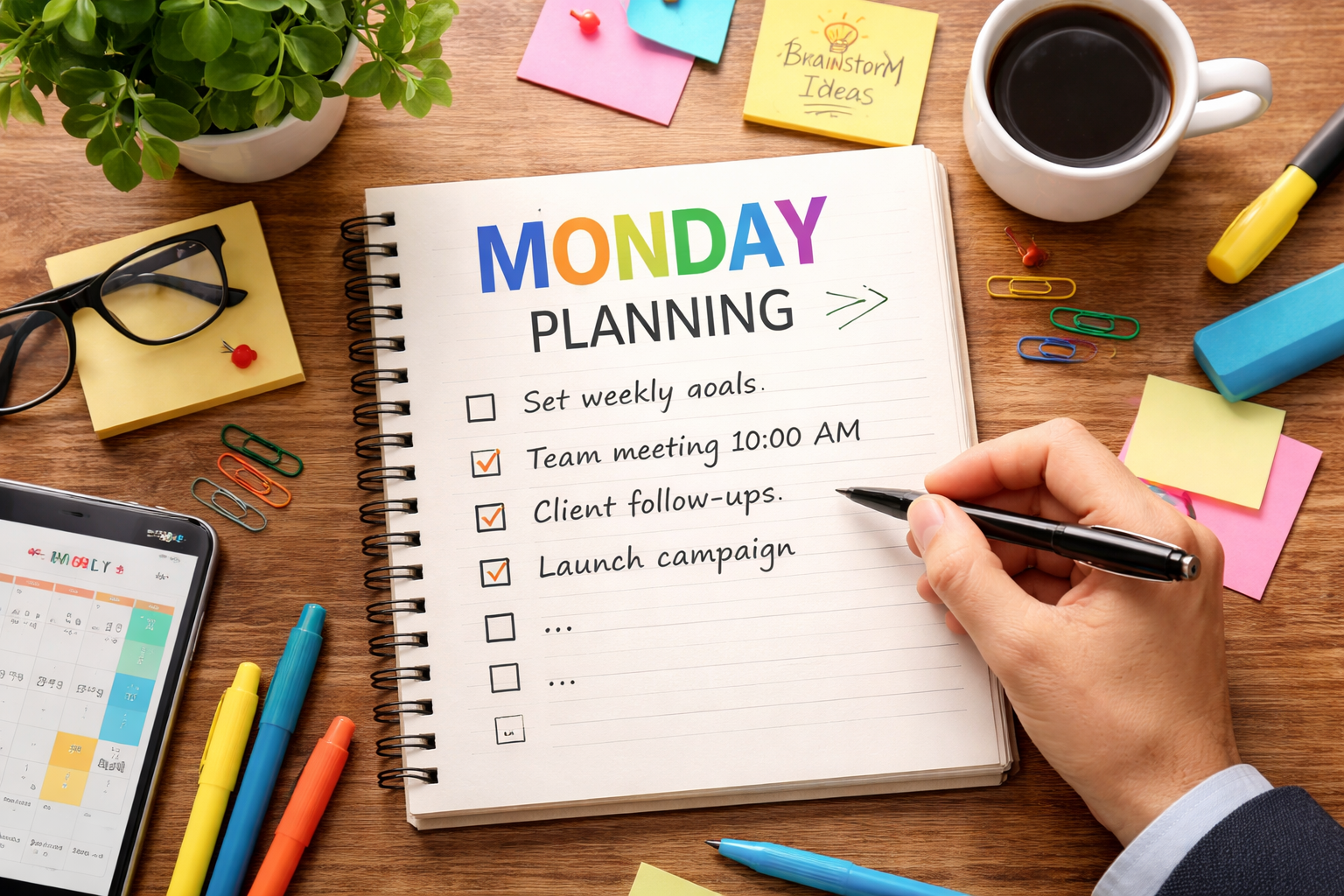
So what exactly did I change? First, I blocked 2 hours every Monday morning to plan my week, and I stayed disciplined about using that time only for planning. I did not respond to email, I did not check my phone, and I focused only on planning. I broke up my focus into three areas:
- Personal Growth
- Pipeline Development
- Deal Checklist
I reviewed the top 4 areas on my personal growth checklist and blocked time each week to focus on one area. I thought about leaders who were good at a specific topic and would ask for a one-on-one to learn their secret.
Next, I reviewed my top pipeline development activities and blocked time each week to focus on one activity. For example, I might block an hour to plan a marketing event for the following quarter. In addition, I blocked out every Friday from 1 pm to 3 pm for my favorite pipeline activity: cold calling. The key to success is to block time on the calendar and stay committed to that time. This allowed me to focus on activities that were critical to my personal growth and pipeline development, even though they were not time-sensitive.
Finally, I reviewed my pipeline and deal checklist for all deals I expected to close in the current and next quarters. You might be asking. What is a deal checklist? It's an ongoing summary of the account basics, people, pain points, competition, risks, and next steps for moving a deal forward. Think of it as a mini account review document you can share with the team that summarizes the account. This is a working document you build over time as you uncover new information. The key is to review the sequence of events and make a to-do list of what you want to accomplish by a specific date.
For example, I might add an entry that says: Implementation Overview by March 15th. Schedule a call with the director of finance to discuss the implementation overview and potential risk of an extreme estimate. Another example might be: Triangulate Partner by March 18th. Schedule a call with the implementation partner to request help scoping the project. A final example for an internal team might look like this: Prep Implementation Team by March 13th. Send the deal checklist to our implementation leader and schedule a call to review the account basics, key win themes, and areas of concern.
Blocking time to consider next steps helped me formulate a strategy and turn it into a to-do list, keeping me focused on moving each deal forward. More importantly, updating my deal checklist helped me clearly communicate a strategy to leadership and my team. At the end of my planning time, I would email the forecast and deal checklist to both my manager and my team. This provided my team and my leader with a clear picture of the next steps in each opportunity and gave me clear talking points during my one-on-one meeting. The unintended benefit of this planning time was that my leader had a crystal-clear picture of my strategy, could make suggestions, and we could efficiently walk through it for each deal. In addition, we could use the remaining time to role-play key conversations to better prepare for the next discussion.
In summary, changing your planning habits starts with committing to planning time. It seems simple, but like any habit, changing it and delaying focusing on the urgent is challenging. Next, block time on your calendar for personal growth and pipeline development. These are long-term benefits and can be easily ignored if you don't commit to the time. Finally, take time to think through all the steps in each sales cycle and develop your strategy.
It will pay tremendous dividends in your commission statement and will put you on a path to leadership.